
A walk in the woods at Barfield-Crescent Park in Murfreesboro 24 January 2016. The first steps on a long 2016 journey. Shot with an iPhone 6S, professional quality video in your pocket. #bnabucketlist

A walk in the woods at Barfield-Crescent Park in Murfreesboro 24 January 2016. The first steps on a long 2016 journey. Shot with an iPhone 6S, professional quality video in your pocket. #bnabucketlist

“Tools for Schools” is a non-profit 501(c)3, all volunteer group building desks, tables, bookshelves, planters or just about anything needed made of wood or metal for public schools in Nashville. They meet up in the Hillsboro High School former auto vocational shop Monday, Tuesday and Wednesday from 8 am to noon. It’s located in the rear of the campus near the football field.
The price to the school for equipment is material cost, plus a small mark-up for administrative expenses. This 8’ hardwood trophy case, only cost Percy Priest Elementary $386 to produce.
Support metro schools, learn a trade and hang out with some great guys and gals.
For more information: nashvilletoolsforschools.com • 615.442.6837 (NTFS)

 Camp Widjiwagon at Standing Stone Park:
In the summer of 1972 Richard (Dick) Wooten led us on an ambitious adventure. His mission took ten YMCA campers from the recently defunct Camp Widjiwagon on the adventure of their lives. Earlier that year, the camp had abruptly closed due to an administrative error by the state parks department. It resulted in the termination of the camp’s 18 year lease at Standing Stone State Park, and the permanent closure of the facility (there are other camps by that name in Nashville and Minnesota).
Senior campers had been selected to be camp counselors: L.I.T.’s (leadership in training). L.I.T. was the transition from camper to counselor at Camp Widjiwagon. Due to the administrative SNAFU, we were “out of a camp” after years of attendance.
My parents, Bobby and Carol Henderson, stepped in to try save the program. The lease could not be rescued, but they hoped that the future counselor candidates could be trained, and then go on to another YMCA facility. This would be the chance to get training in leadership. Leadership at a camp that no longer existed. Our new camp would be located along the southern Appalachian byways, back roads, streams, lakes and mountain tops. Our summer home would be a red GMC cargo van with a canoe trailer.
The ad-hoc course consisted of rock climbing, backpacking, and white-water canoeing. The Nantahala, a class III river in western North Carolina, would be the final hurdle in the program. Making the voyage even more difficult, we used bulky two-man aluminum lake canoes, as apposed to white water canoes, which had a higher profile and smooth hulls for faster turning. These metal boats were hard to maneuver and prone to flooding after a few large waves. Widjiwagon’s former canoe instructor, Dick Wooten was recruited to lead the expedition.
We rock-repelled Sunset Rock, hiked 70 miles of the Appalachian Trail and climbed Mt. LeConte (cross-country and back in one day from Greenbrier). We spent most of the summer learning canoe skills on the Conasauga, Hiwassee and Nantahala rivers. Managing ten teenagers in five boats was no small responsibility. Dick Wooten did this with a combination of no-nonsense attention to safety, while injecting humor along the way to keep it amusing. We tested him every step of the way. Unbeknown to us, this combat decorated Korean War veteran had seen worse and managed far more difficult situations. How we made it through that summer with no significant injuries, is an astonishing achievement.
The modern day Camp Widjiwagon marveled at the story of this journey, and said that this would be an impossible liability for any YMCA camp today. It was not by luck, but because Wooten was seemingly present at every turn in the road to head off disaster.
The climax of the summer was the 1972 Southeastern U.S. White Water Championship on the Nantahala River. I run it today, and still get butterflies. It’s an hour plus of full adrenaline, a river so cold it literally takes your breath away if you fall in. A water rescue is always a big part of the training and preparation for the run. It’s a team effort, leaving no room for hesitation or error.

The white water standing waves come on you at every turn in the river. The lake boats were so low in the river, it required us to bale water with every single stroke. We used plastic jugs with the bottom cut out, to scoop the water from the boat. With each paddle down-stroke, you pulled upward fetching a jug of water from the canoe, heaving it off overboard. Many times, this ended up going all over the paddler in the back, or the canoe next to you – with reprisals for the error.
We used wooden paddles which were subject to breaking in the violent current. A spare one was on board as a back-up. They were loosely tied in with kite string for easy retrieval.
I forget how many volunteered for the competition, but Wally and I were in. The crystal clear water, constant waves and swift currents are as vivid to me, as if it were yesterday. Wally Hynds had the stern and I had the bow.
I was pretty sure we were in fourth place by the finish line, 8 miles downstream. We were closing in on the boat in front of us, but suddenly they pulled away just before the big rapid at the end of the course. As they went into the drop, we lost sight of them due to the 3-4 foot fall of the river. As Mr. Wooten had rehearsed with us, Wally and I set our pre-planned course at river-left, to make a 45° cut down the falls. I pulled a hard port side draw stroke to come left, and then a hard starboard right turn draw into the falls.
There were a lot of people in our peripheral vision and the screams of the crowd flowed threw the roar of the river. But the screams were not for us. Hitting the drop, into the river pool below, we heaved forward not letting our strokes dissipate, or losing balance in the narrow craft. As my eyes rose up, and my third stroke pulled me through the gauntlet, I saw the aftermath of our competitors surge forward. Having rolled their canoe in the falls, one of the boys had grappled onto a large rock in the middle of the river, about 50 feet downstream from the falls. He was pulling himself up out of the river onto the large boulder. This was probably the front paddler.
– Mr. Wooten had trained us never to do this –
As we veered past him, I witnessed the submerged canoe surface right behind his position. Like a boa constrictor, it quietly wrapped itself around his lower extremities pinning him to the boulder. A cold chill coarsed threw me as we slid by. Running at over 700 cubic feet per second, a canoe filled with water can crush bones like a dry stick.


My recollection was that he was pinned, below the waist on the rock, after climbing as far to safety as he could up. By the time we walked back up to the accident, they were still working to get the boat off him. I don’t remember anything after that, except being handed this medal that evening. 3rd place, but it was a hollow victory. I never knew the fate of the crew, after that.
Thanks Dick Wooten, for leading us out in one piece. It made boys into men. You instilled in us, an love for the outdoors, and more importantly, the value of leadership, team work, preparation and planing. Safety is no accident.
If this blog finds it’s way to anyone in the group, please feel free to share your stories here.
The featured photo at the top is running Wesser falls in the late 1990’s with my son Eric.
Widjiwagon at Standing Stone Facebook Group Page


July 5, 1982
Mr. & Mrs. Robert W. Henderson
222 Vaughns Gap Road
Nashville, TN 37205
Dear Mom & Dad,
I just thought I’d drop y’all a line to let you know how much fun I’m having at summer camp! Here at Charlie Kilo Bravo (Camp Kick’n Booty), we have lots of fun activities that last all day long.
First we play exercise. This game is very fun because you get to see the campers turn all different shades of pretty colors. At this point people do the most remarkable buffalo imitations. After morning recess we get to play jungle soldiers in the mess hall. This event requires a great deal of skill, because the enemy is very carefully disguised: last week I was attacked by an ambush stew (it attacks your stomach when you’re least likely to expect it).
After lunch we get to take an afternoon nap. This opportunity is afforded us in the cool confines of our class rooms. The only problem with this activity for me though is, that I have not yet learned to sleep with toothpicks supporting my eyelids – very uncomfortable.
The only thing I don’t like at this camp is the big green man that comes around. He has a very big hat that looks like Smoky the Bear. However, he is much louder than smoky. He screams and yells a lot, calling us all sorts of names I never heard of before.
Yesterday he told me my head was made of silly putty – but I don’t believe him. I think his undergarments are too tight or something, cause he always looks so red in the face. I think the man needs a vacation. Maybe you could talk to his boss?
Well, I’ve got to go now, my counselor just informed us that he is taking us out for rifle target practice – with a gun?
Your devoted camper boy,
“Telly Savalas” Henderson
Love, Bob

Preservation of family cemeteries in north Rutherford County is important. Rural areas are turning into suburbs fast. Vandalism, neglect and real estate development is a growing concern.
Cousin Billy Pittard and I joined forces to clean up the Henderson-Malone Cemetery on Powells Chapel Road this week. As opposed to just cutting the undergrowth, we pulled up the entire root balls of mostly privot hedge and honey suckles. This will make future maintenance much easier. Last Thanksgiving we did the first project like this at the Hoover family cemetery at Walter Hill.
This will hopefully be an annual event following each Thanksgiving on Friday, Saturday or Sunday weather permitting. Fences and gates are also needed for these sites as well.

360 Panorama view of the cemetery
#cemeterycleanup

I’m sad to hear that Ed has passed away. I’m glad I filmed this, because nobody would believe it. Many still don’t. His impressive obituary adds even more credibility to the story.

A beautiful motorcycle ride October 11-14, 2015
Day 1- Murfreesboro, Bell Buckle, Tullahoma, Winchester, Cowan, Swanee, Lookout Mountain, Cleveland, Hiwassee Ocoee Gee Creek Campground
Day 2 – Gee Creek Campground, Chilhowee Mountain, Murphy, NC, Nantahala, Balsam Mountain Camp Ground
Day 3 – Mountain Camp Ground , Blue Ridge Parkway to Boone, NC (299 miles) – The Inn at Crestwood
Day 4 – Boone, NC to Murfreesboro
https://maps.googleapis.com/maps/api/streetview?size=600×300&location=35.1138141,10.013988, -84.6153726&heading=151.78&pitch=-0.76&key=AIzaSyBanxeFrILod-b5cLrGKSt0Z8SqgPDJTtM

by Bob Henderson, Jr. | Belmont Alumni Board | Class of 1982
Reviewing ‘From Here to Anywhere’ by Joy Jordan-Lake, at the Belmont 125th anniversary book-signing tonight, I have a story to add. Thumbing through the photos, the Corn elia Fort picture caught my eye. I have a little known family story about her, told to my brother and me by our cousin Dick Henderson a few years ago.
Dick’s father (my great uncle) John Bernice Henderson, Sr. of The Southwestern Company owned the farm adjacent to the Fort’s, which is now known as Shelby Bottoms. They called it Wild Acres. Dick vividly described to us the “old-growth” forrest he explored there as a child.
The Henderson’s were close neighbors with the family of Dr. Rufus Elijah Fort, founder of the National Life and Accident Insurance Company. They had many stories. Dick once described his brother racing past Cornelia’s chauffeured commute to Ward-Belmont one day, nearly ending in calamity around Shelby Park.
Dicks father (uncle “J.B.” to us) was a sport pilot, as well as his boys: J.B. Jr., Bruce, Dick and even daughter Ceacy. Dr. Fort was so concerned about this hobby of his neighbors, he made his own son promise that he would never learn to fly. Not anticipating that his daughter Cornelia would consider this vocation, he failed to make her pledge this oath. The rest is history.
Cornelia was the first U.S. pilot to encounter the Japanese air fleet during the Attack on Pearl Harbor. After her tragic death in 1943 ferrying a BT-13 out of Texas, J.B. donated the land they used as a grass runway to the Civilian Air Patrol. It was named Cornelia Fort Airpark. Cornelia was truly a pioneer for women in the armed forces, and military aviation in particular. Another Belmont legend.
Cornelia is another Nashville unsung hero. She is not even mentioned in the New Orleans World War II museum (as of January 2023.) This trailblazing aviator deserves a full size statue. Fittingly at the Nashville International Airport.
Book: Daughter of the Air: Brief Soaring Life of Cornelia Fort
#belmont125 #corneliafortairpark #womenmilitarypilots
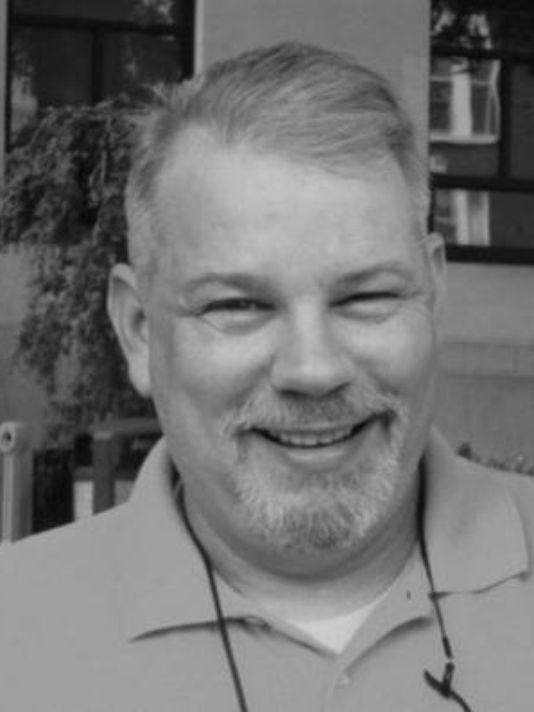
One of the best guys I ever knew: #hillwood
I was really looking forward to seeing Jeff that Saturday night at Fred’s party. I hadn’t seen him in a while, but we stayed in touch.
Last week I signed a new account near Jackson: “I’ll check in with… I need to talk to you. I want to celebrate. I need your advice about a tech issue. I need to hear your contagious laughter.”
I remember talking with Vicki at Woodlawn. She started to tremble, trying to tell me…I stopped her. “Try to just get thru this part of the day. You are allowed to fall apart later.” I didn’t plan on that conversation. The words just came flying out of my mouth. I gave her my business card and a hug. I should have asked for her number in case she didn’t call me. Maybe she needed to fall apart right then and there? Who was I to say?
She didn’t reach out. Surely it couldn’t get any worse…find her. A personal issue distracted me. Before I knew it, another world quietly collapsed. I didn’t even know she was right down the street from me.
I still feel pain and loss. I can’t imagine how much amplification of that emotion feels like on the other end. Thanks for sharing. It’s important.

#bikeboatbeamerboondoggle
DECLASSIFIED: Freedom of Information Act. Requesting Authority: Newman
Situation Reports: 28Aug15
Sitrep 1 – 18:20 CDT: Late departure to high value target objective. Command & Control issues.
Sitrep 2 – 21:50 EDT: Arrive at objective Gee Creek. Discover campsite Alpha-16 occupied by unknown poachers. Due to Missing in Action reinforcements, decide not to engage the enemy at this time.
Sitrep 3 – Zero-Dark-Thirty: Killed in Action: air mattress experiences catastrophic failure.
Sitreps 4 thru 18 – air mattress still experiences catastrophic failure.
Situation Reports: 29Aug15
Sitrep 1 – 10:30 EDT: Launch flotilla early to avoid civilians on the main river channel before Appalachia Powerhouse river release of Generator #2.
Sitrep 2 – 11:30 EDT: Observation – river level not improving (de-briefed later that Generator #2 had failed earlier at 06:42 EDT).
Sitreps 3 thru 79 – 11:30 to 12:36 EDT: U.S.S. Bobert runs aground 76 times. No major injuries.

Sitrep 80 – 12:42 EDT: Complete sortie at point Zulu,12 klicks downstream at Childers Creek. “Intelligence” alert: vehicle and bike security keys are missing in action. Presumed drowned at Devil’s Shoals.
Sitrep 81 – 12:59 EDT: Communications gear inoperative due to geography of terrain (BFE) grid: 35.187019 N -84.499096 E
Sitrep 82 – 13:47 EDT: Escape & Evasion by land from previous coordinates to civilian village 4 klicks south-east.
Sitrep 83 – 14: 51 EDT: Reestablish communications. Request extraction from nearest transport asset. Request chroptyology team.
Sitrep 84 – 16:30 EDT: Transport flatbed arrives with no chroptyology team. Unable to gain access to lock-out vehicles. Flatbed transports vehicle and boat to nearest major population center 130 kilometers south-west. Bicycle asset abandoned at egress point.
Sitrep 85 – 17:38 EDT: Chroptyology asset identified as The Lock Guys, located in Dalton, GA.
Sitrep 86 – 19:45 EDT: Vehicle security system deciphered, reprogrammed and reinitiated.
Sitrep 87 – 20:51 EDT: Regress back to point Zulu at Childers Creek. Bicycle asset liberated under cover of darkness from security cable attached to US Government NPS sign (hack-saw).
Sitrep 88 – 01:27 CDT: Return to base. Bravo-Hotel Zero1 out.
…END OF SITREPS Bravo-Hotel Zero1
After action analysis recommendations:

This is a true story. Hyperbole’d liberally.